


- Home
- Design Stories -HAND TO HAND-
Design Stories -HAND TO HAND-
Antique linens and lace created by hand in France over a century ago.
This collection is a capsule collection created from French antiques carefully sourced one by one by the designer, who visited brocante markets across Paris.
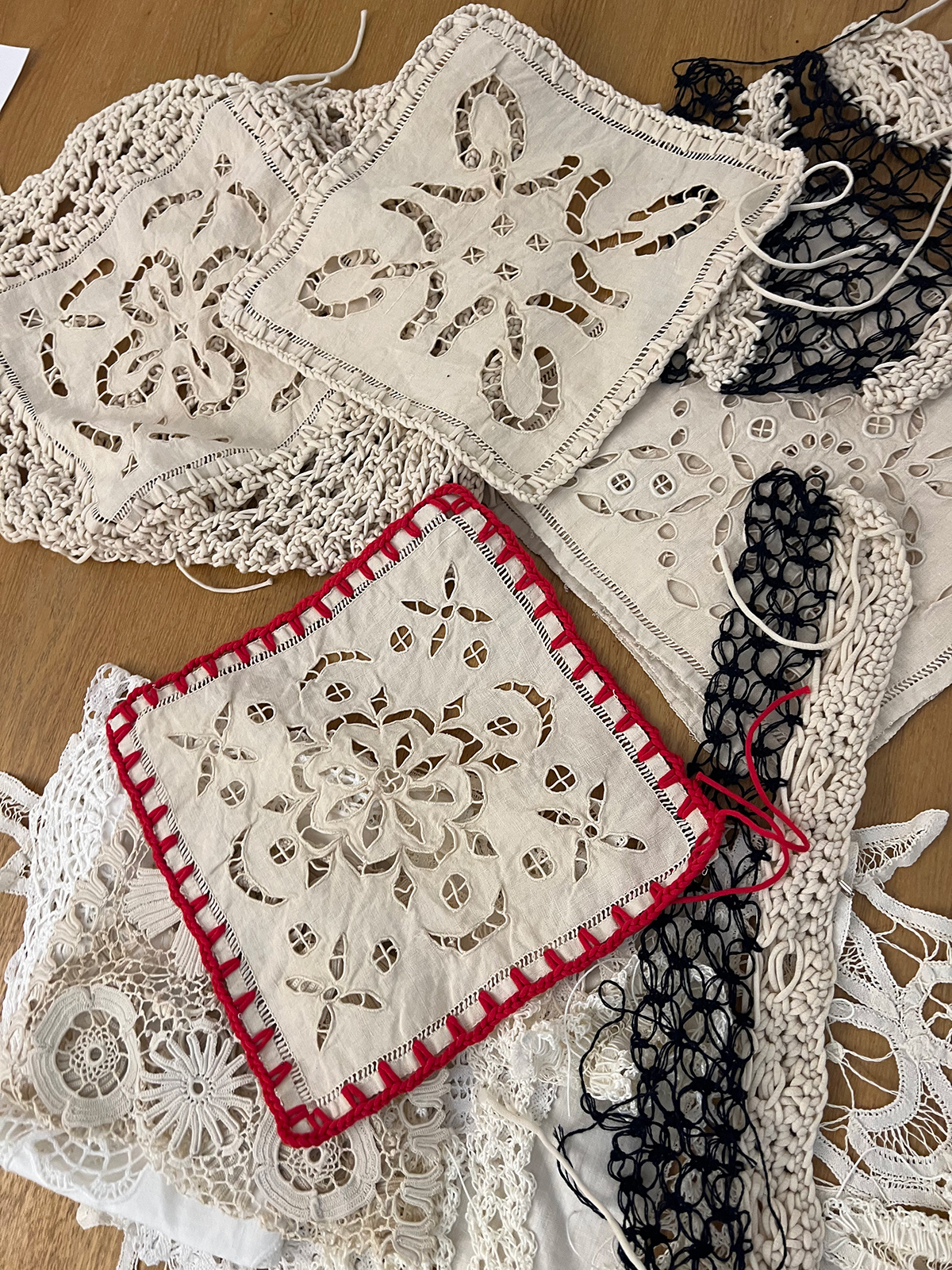
By layering contemporary handcraft onto materials that have traveled through time, they are reconstructed into new garments.
This project, HAND TO HAND, was born as an attempt to let the hands of the past and the present quietly meet.
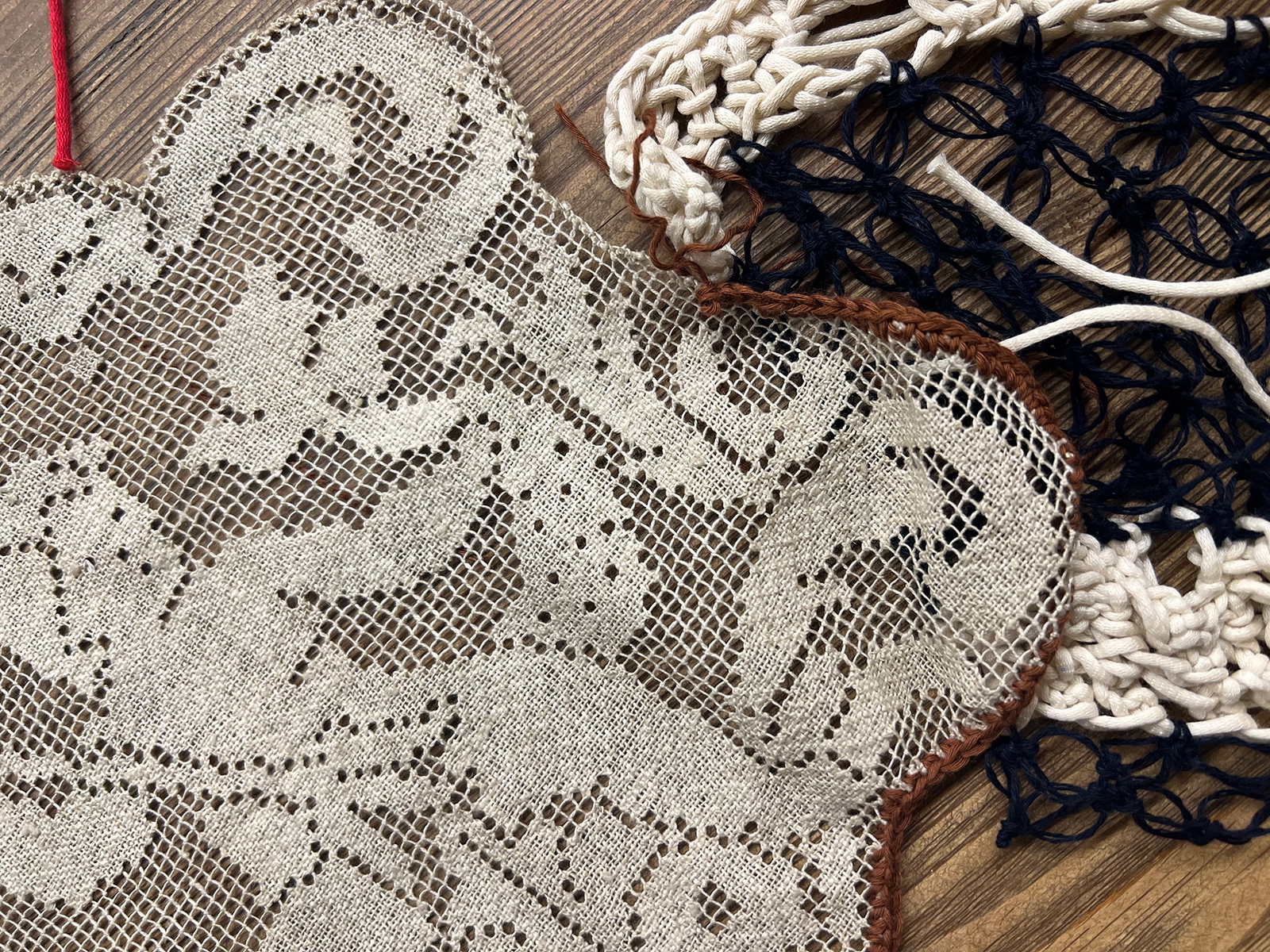
French Antiques
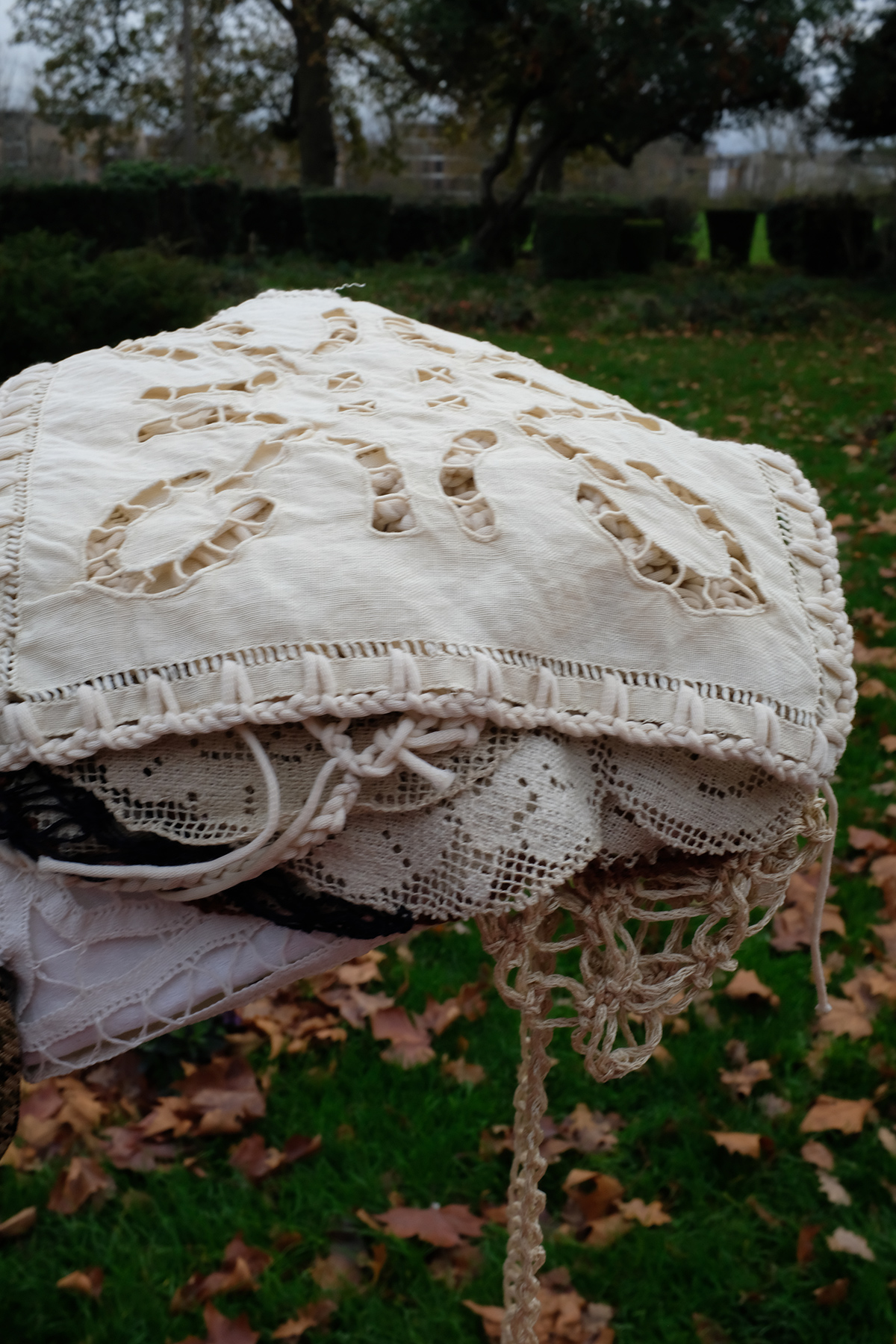
The pieces incorporate antique lace and embroidery made in France between the 1800s and the early 1900s.
Originally, these textiles were used in everyday life as coasters, table linens, or bed covers.
In a time before sewing machines became widespread, lace and embroidery were created entirely by hand.
Within their delicate patterns and stitches lie the time and craftsmanship accumulated through daily life of that era.
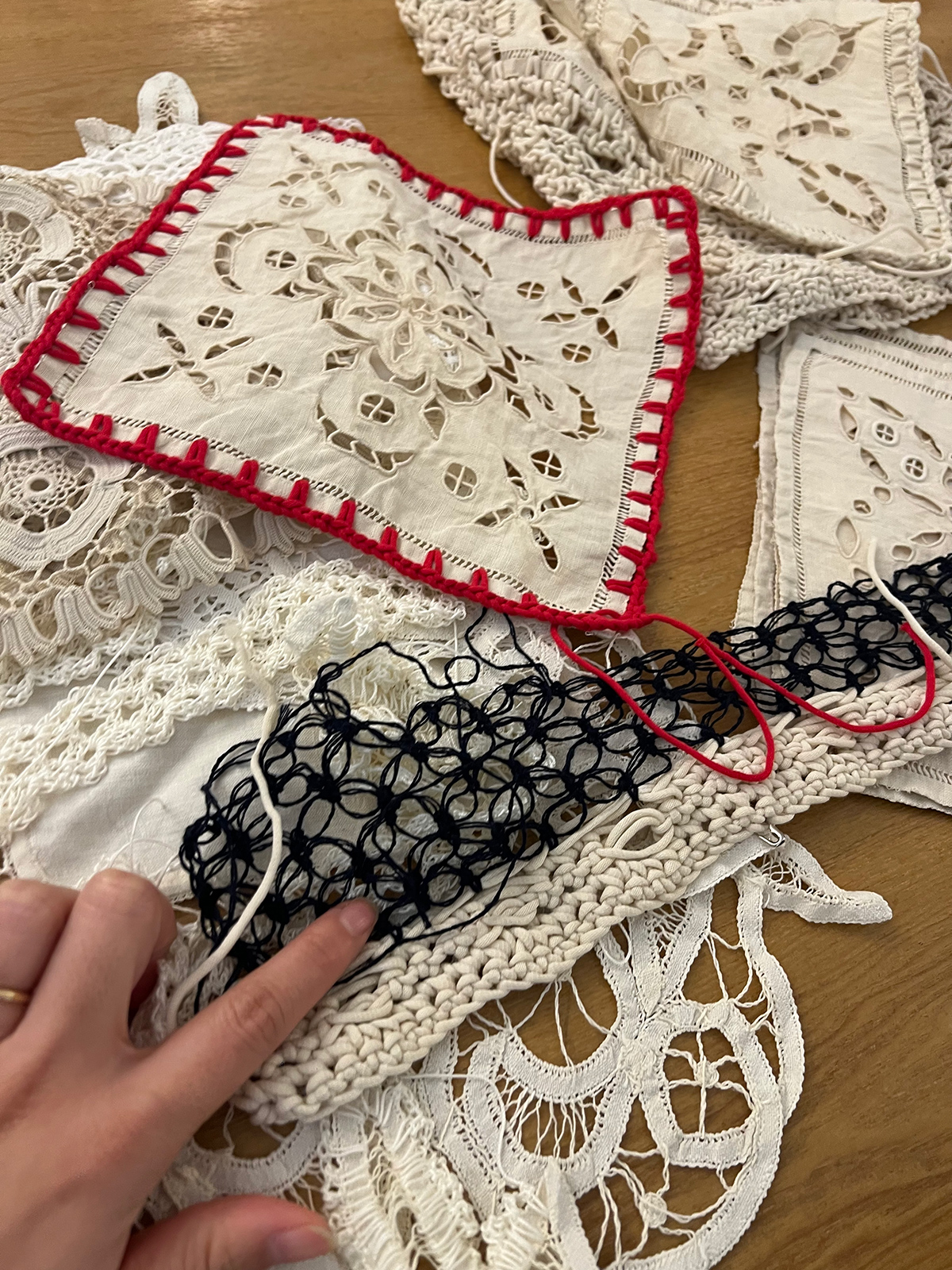
At leinwände, we carefully selected pieces in good condition and gave them a new role as part of a garment.
Reconstruction
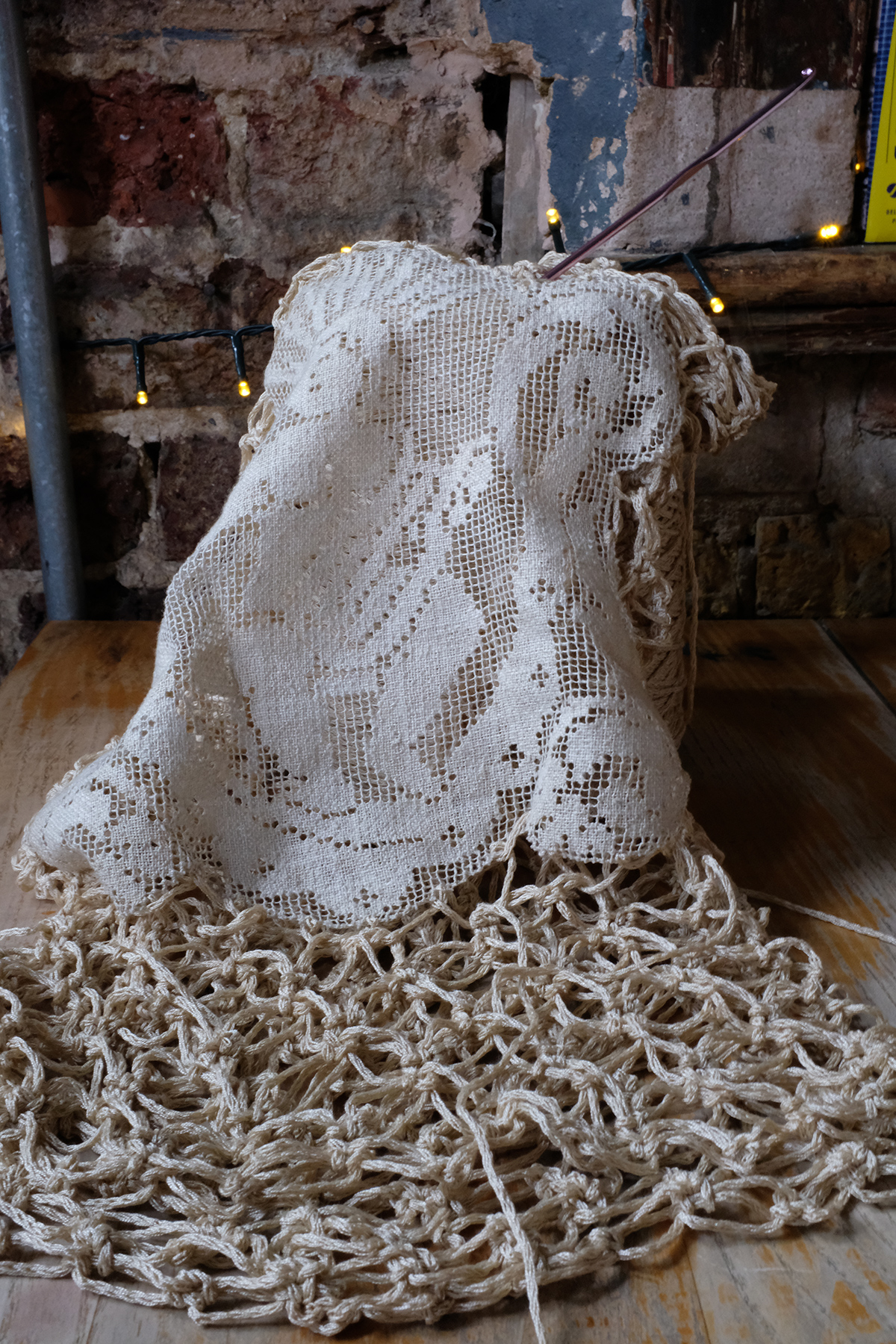
Centering antique lace, each piece is shaped with hand-crocheted knitwork and reconstructed into garments that naturally follow the contours of the modern body.
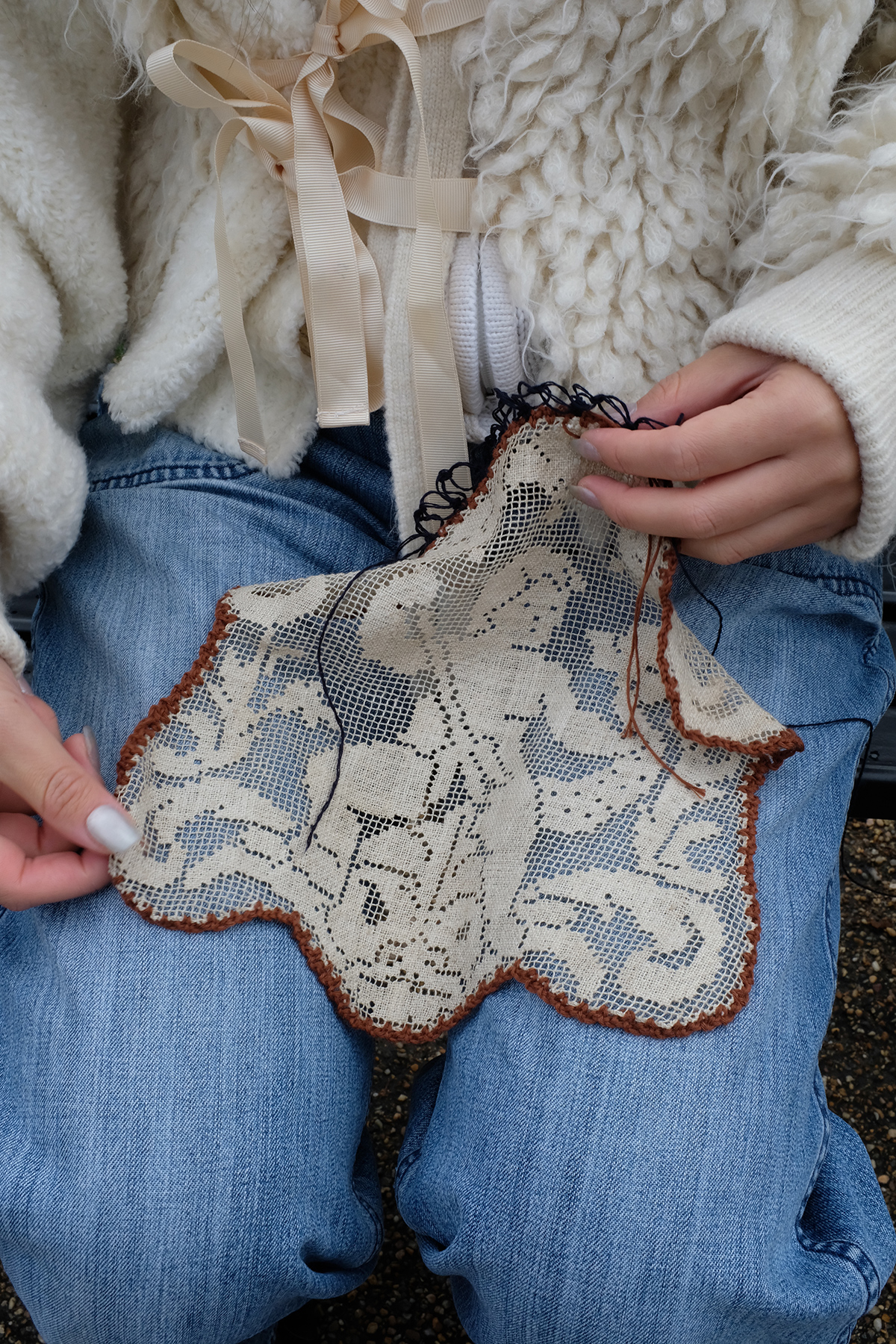
For this collection, knit designer Yuuka Futaba, a graduate of the Knitwear program at Central Saint Martins in London, joined the team.
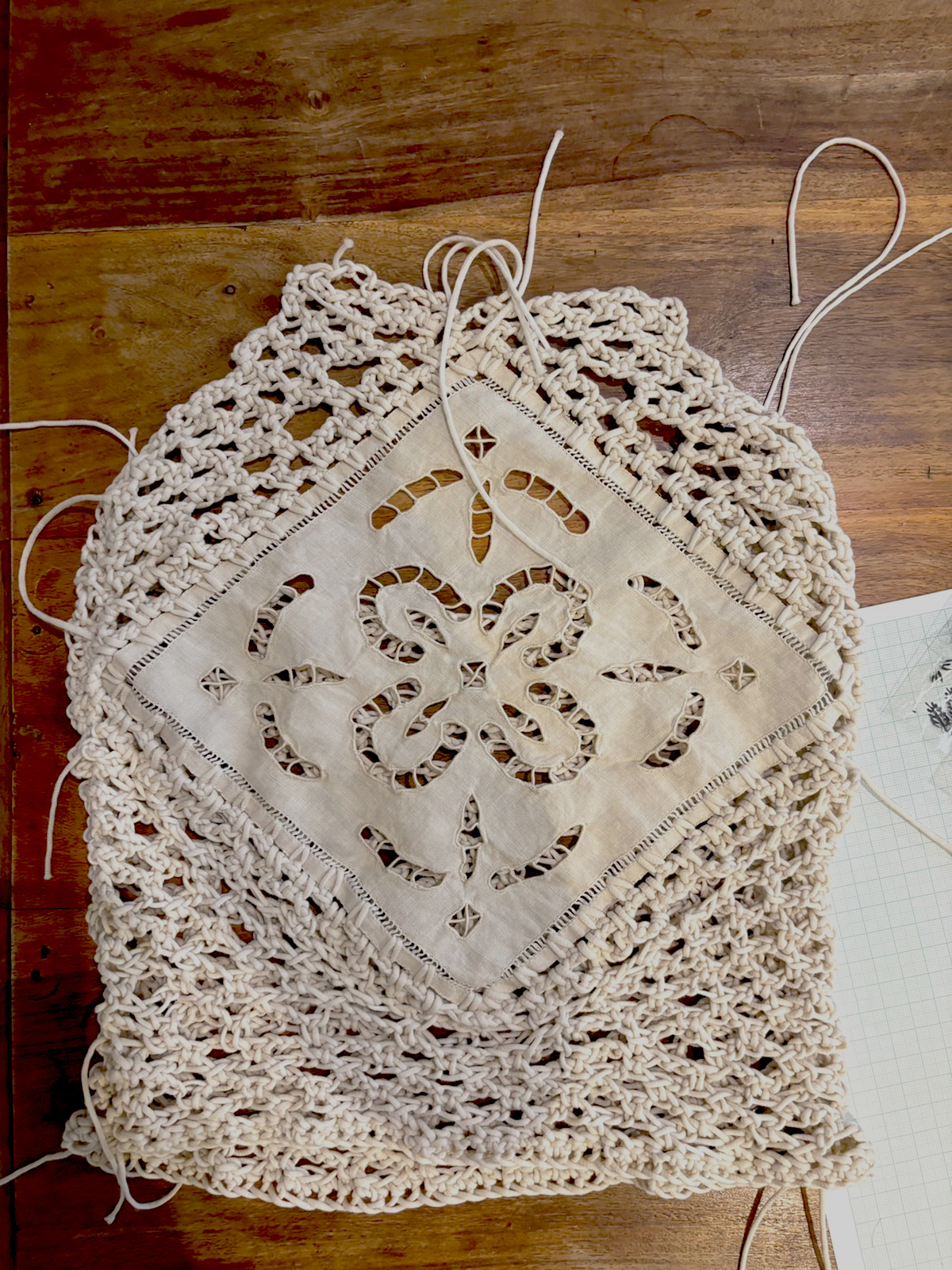
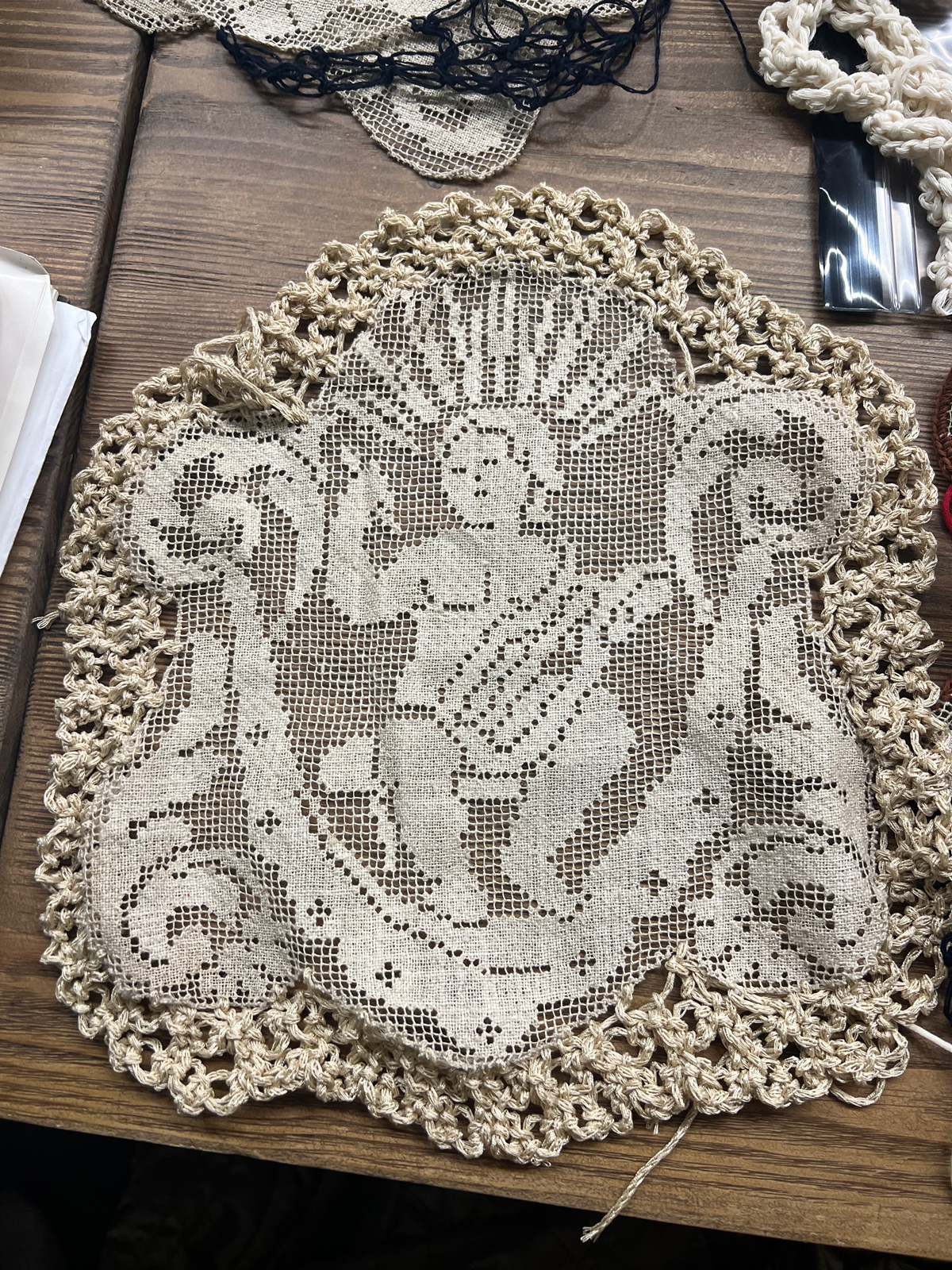
Halter straps, ribbons, and knitted components are hand-crocheted one by one to complement each antique lace piece.
Through repeated adjustments and careful construction, the garments are shaped so that the old textiles and contemporary handcraft quietly come together in a single piece.
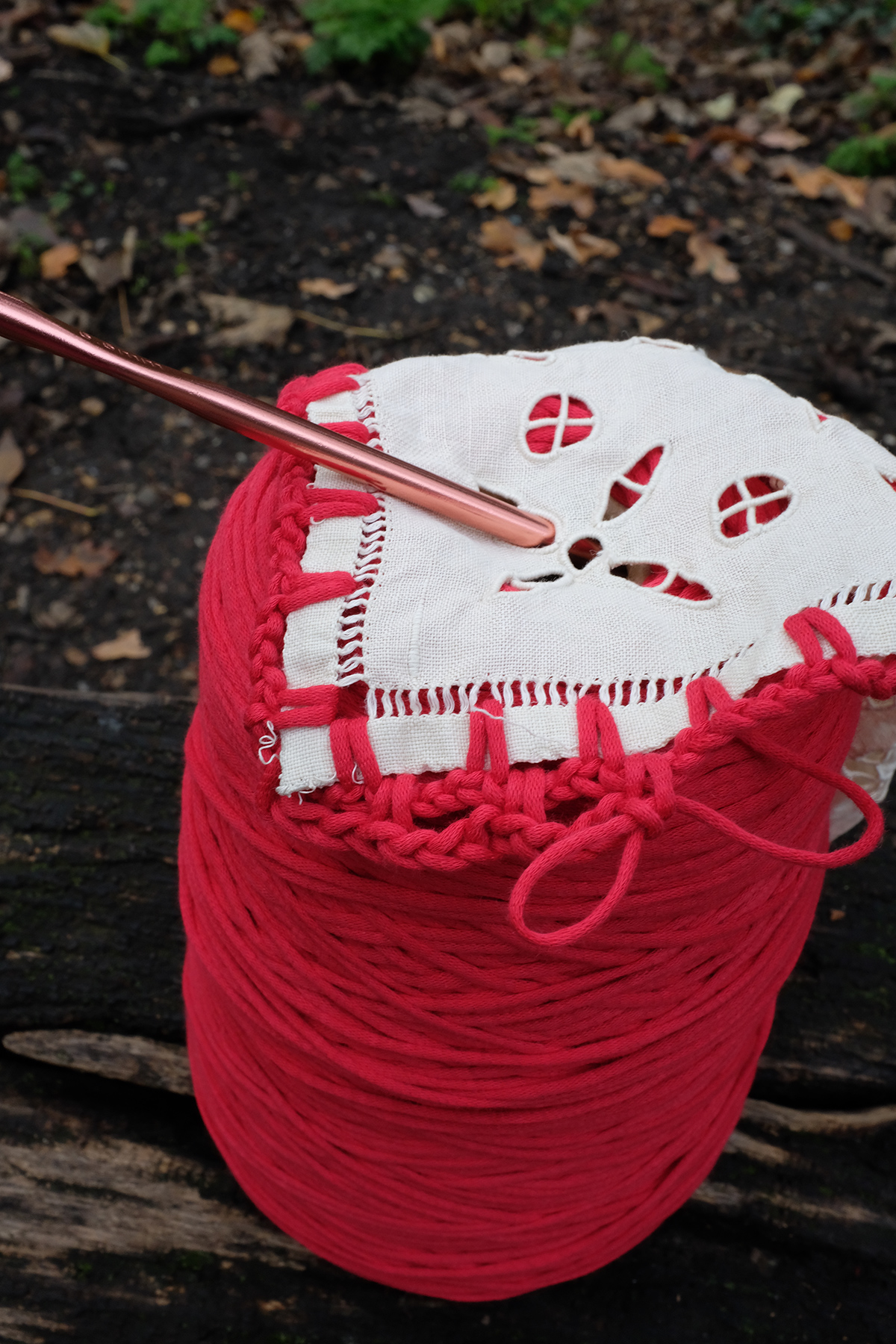
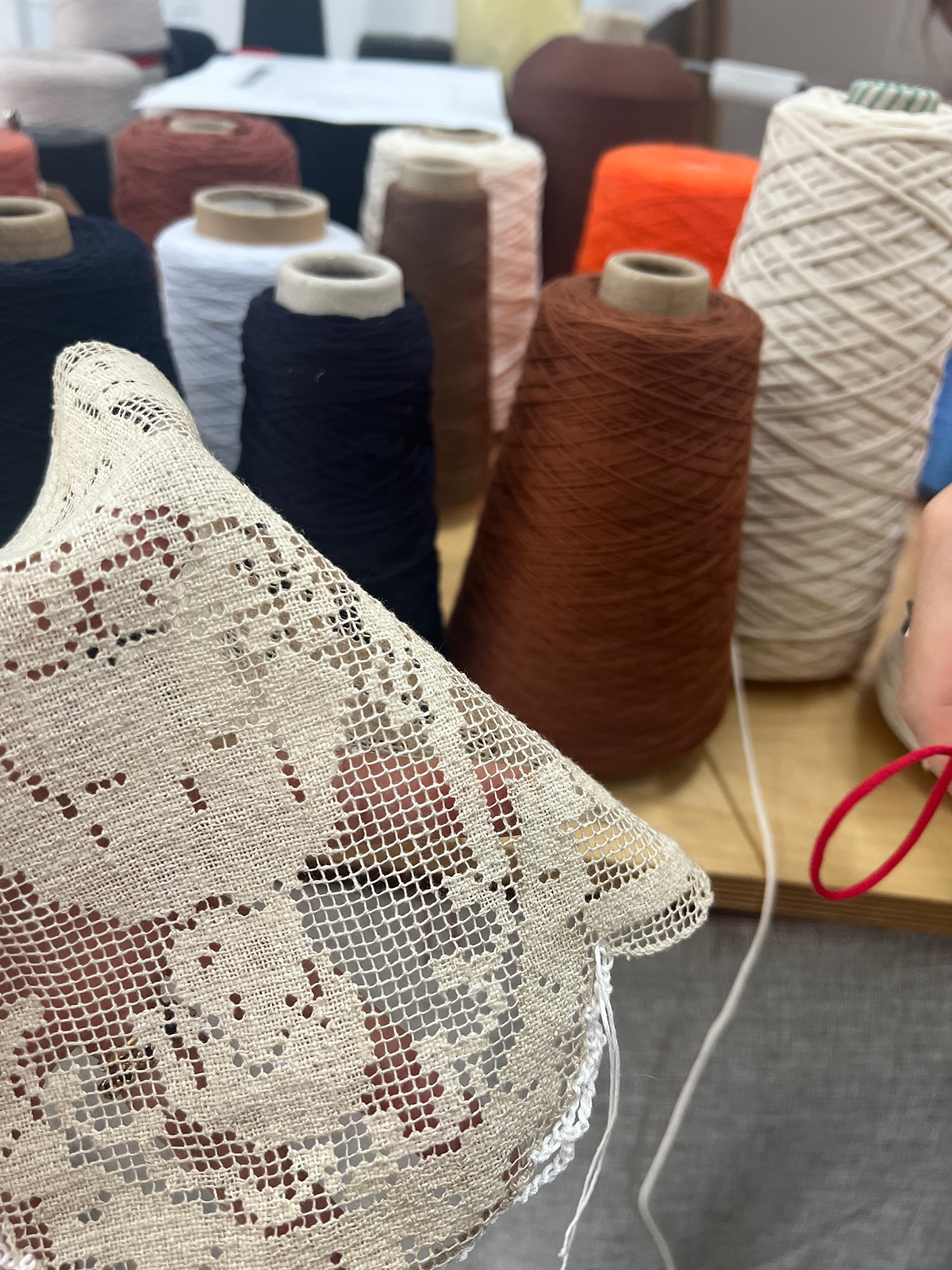
The knit sections are made using Italian yarns such as silk and silk-cotton.
By selecting refined materials that can stand alongside the delicacy of the French antiques, the beauty of the original textiles is preserved while enhancing the garments as contemporary clothing.
HAND TO HAND

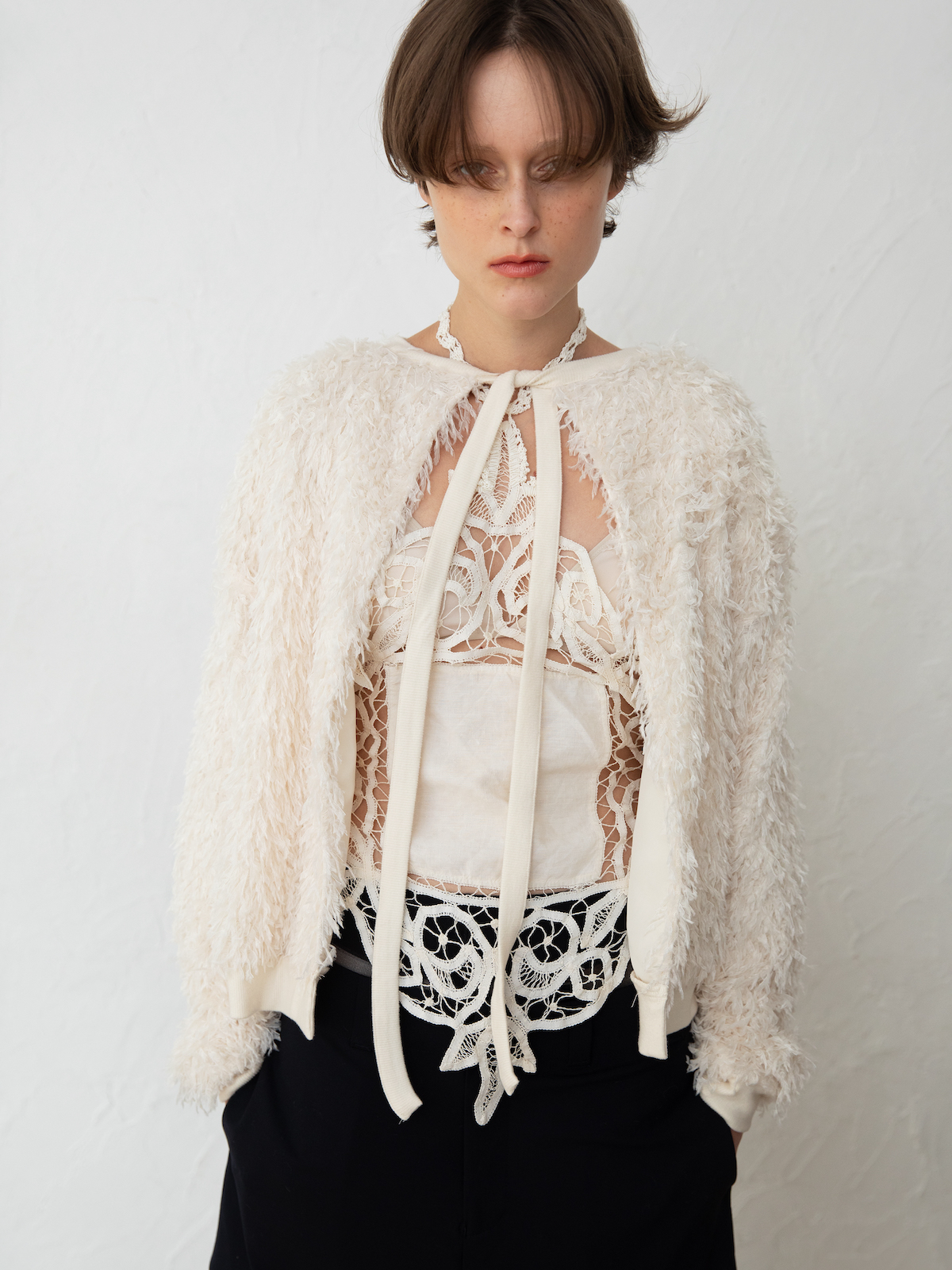
Handwork created between the 1800s and the early 1900s.
And contemporary craftsmanship added nearly two centuries later.
The title “HAND TO HAND” reflects the idea of passing down the time and techniques inherited from maker to maker—and from hand to hand—once again as something to be worn.
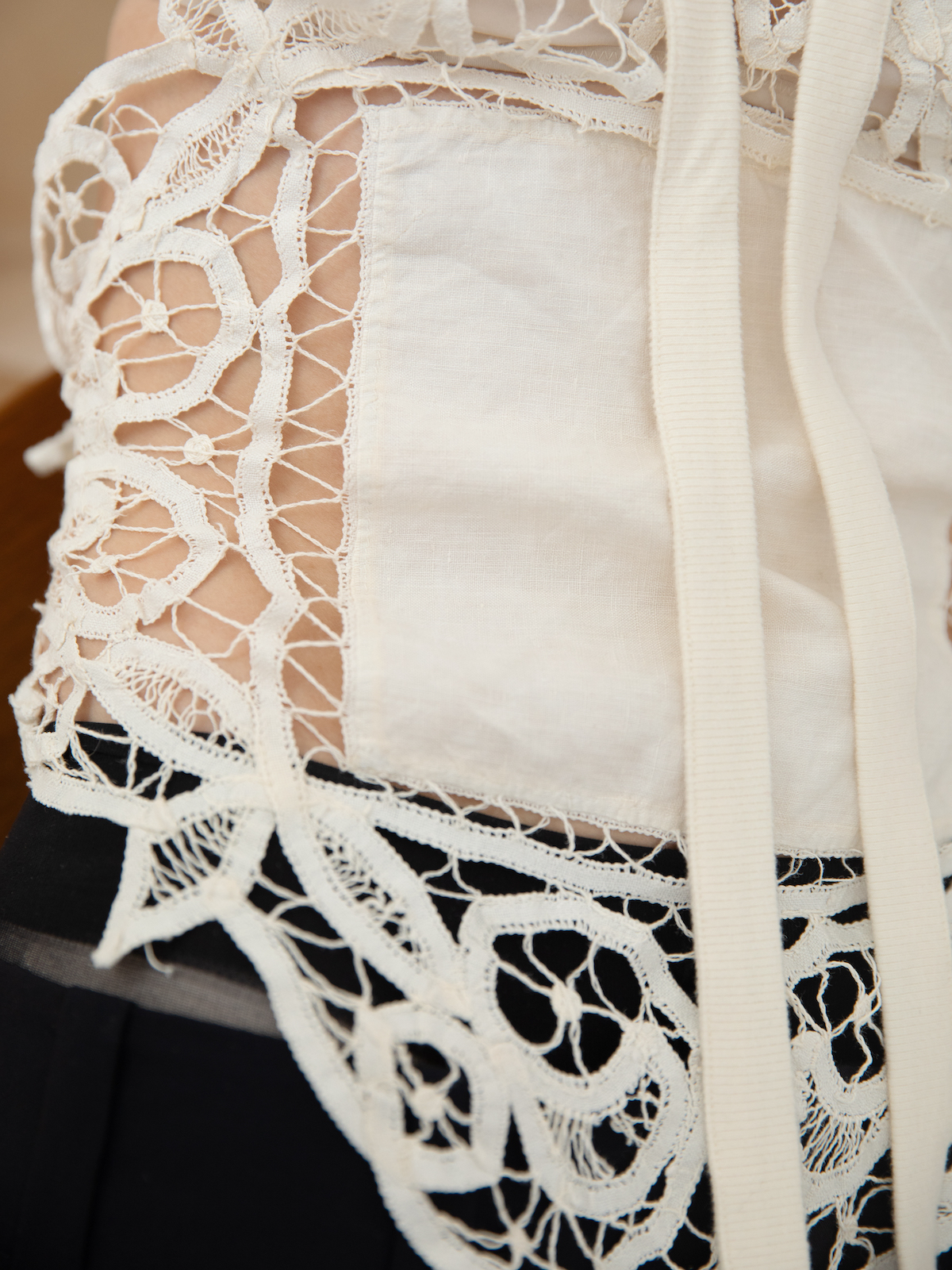
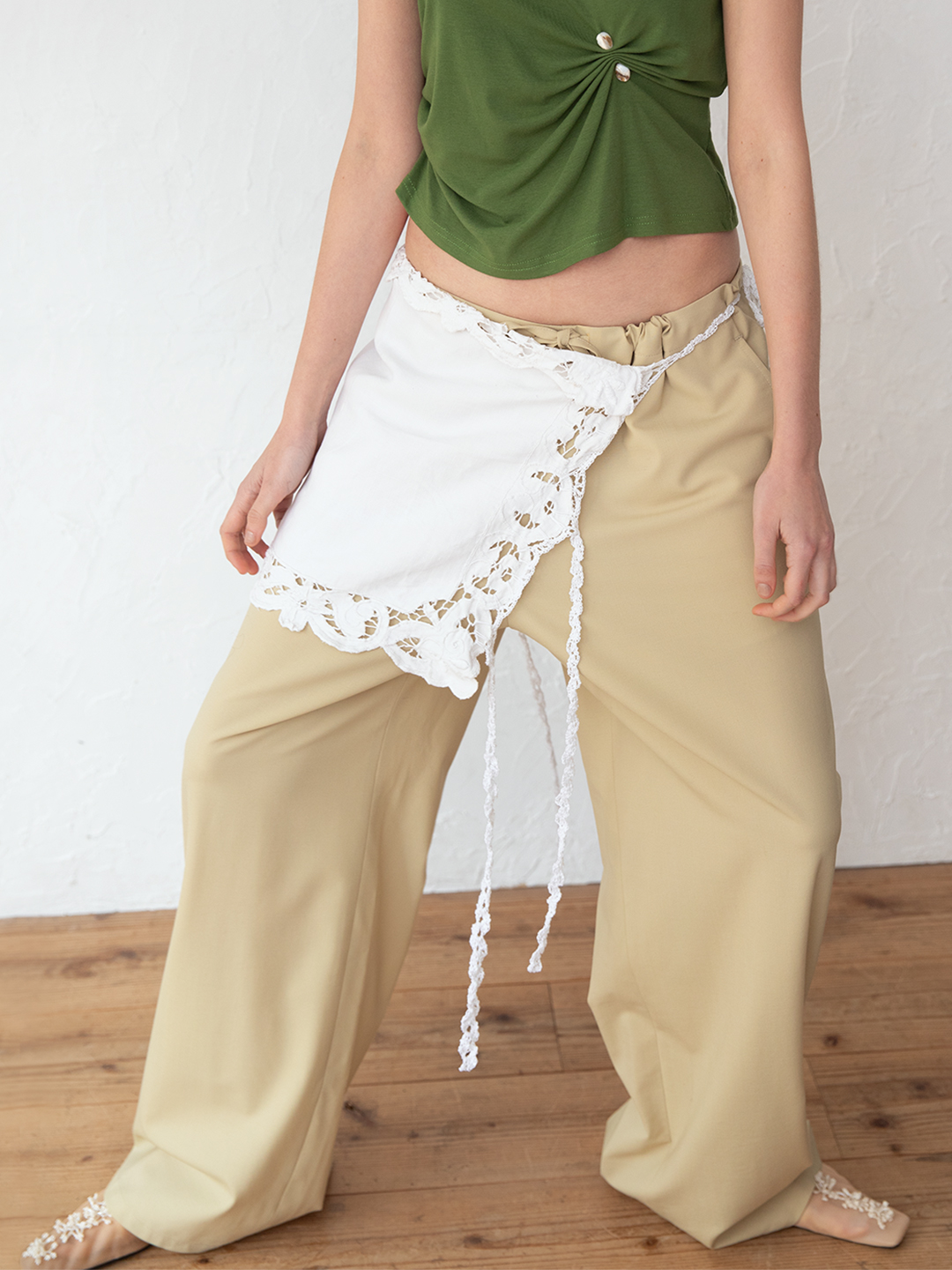
Antique pieces sourced one by one in France,
combined with new handwork added by a contemporary knit designer.
Hands from different eras come together and are reconnected as a single garment.
Each piece is one of a kind.
Materials that have traveled through time meet the craftsmanship of today, resulting in truly unique pieces.
From the Designer
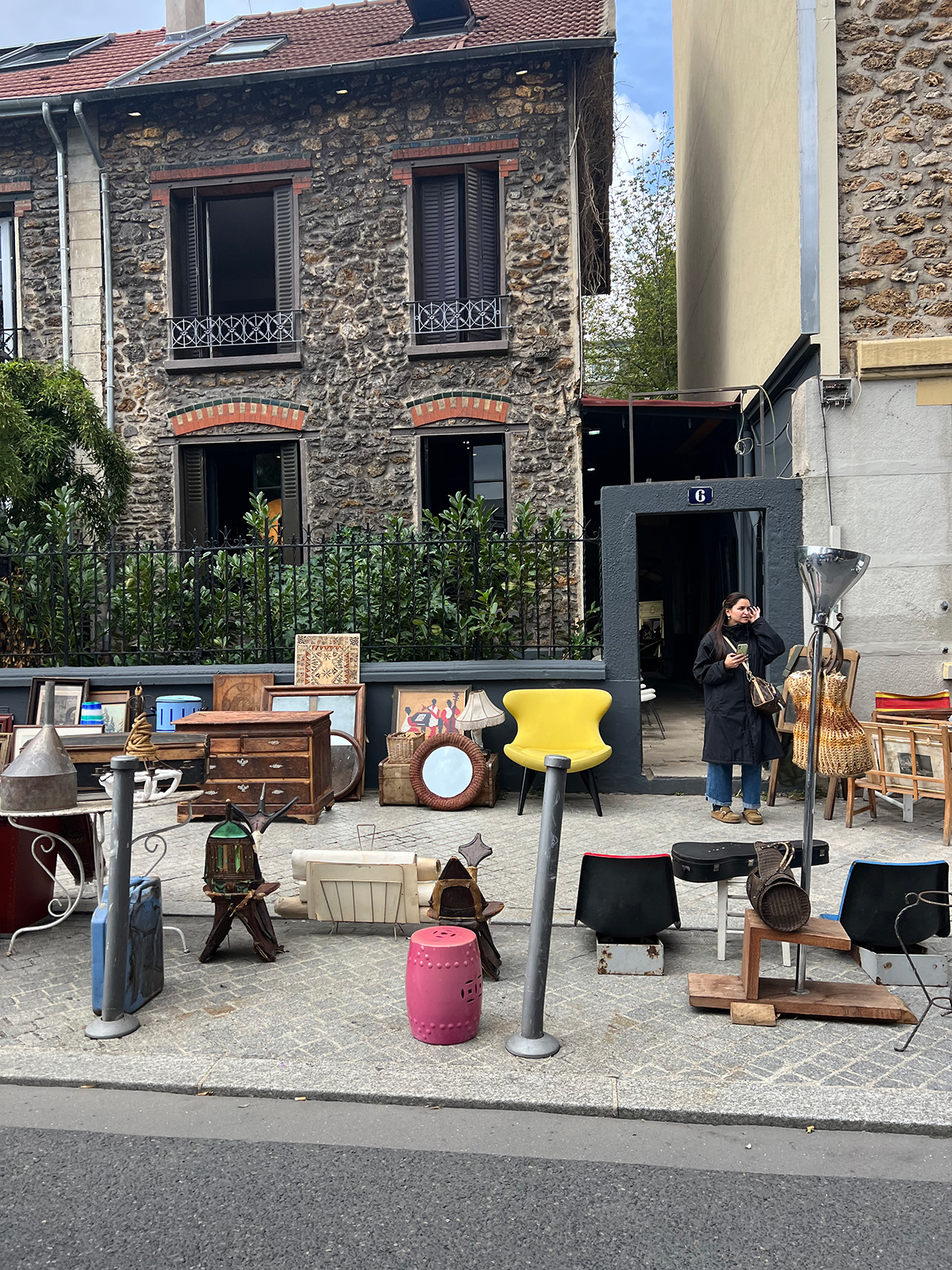
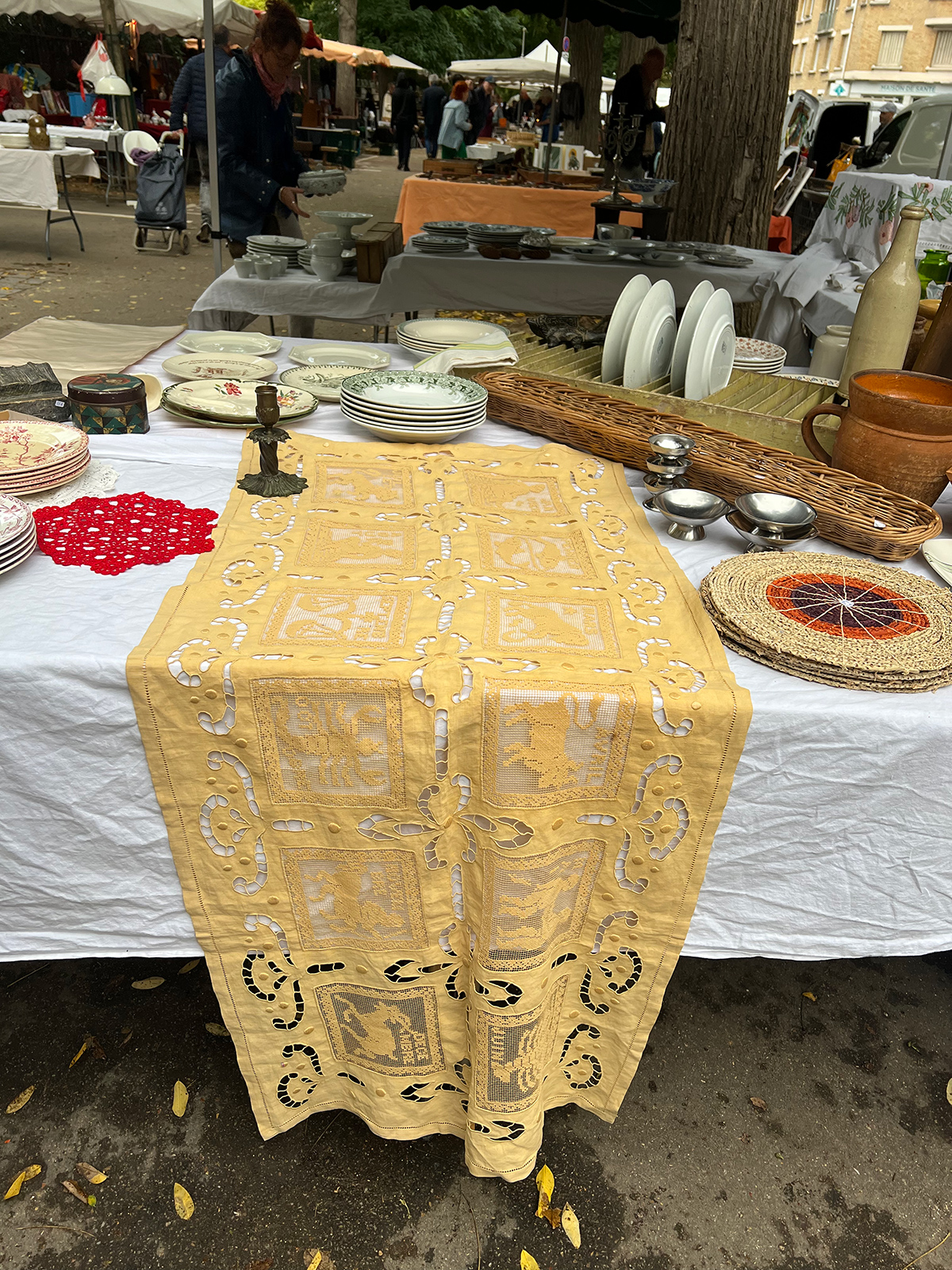
To gather the antiques for this project, I visited brocante markets across Paris.
The sellers shared the stories behind each piece of lace and textile.
Since I don’t speak French, an old friend kindly helped by interpreting for me.
He is the kind of person who always shows up to help during showroom preparations, even carrying an iron with him, and this time again I was truly grateful for his support.
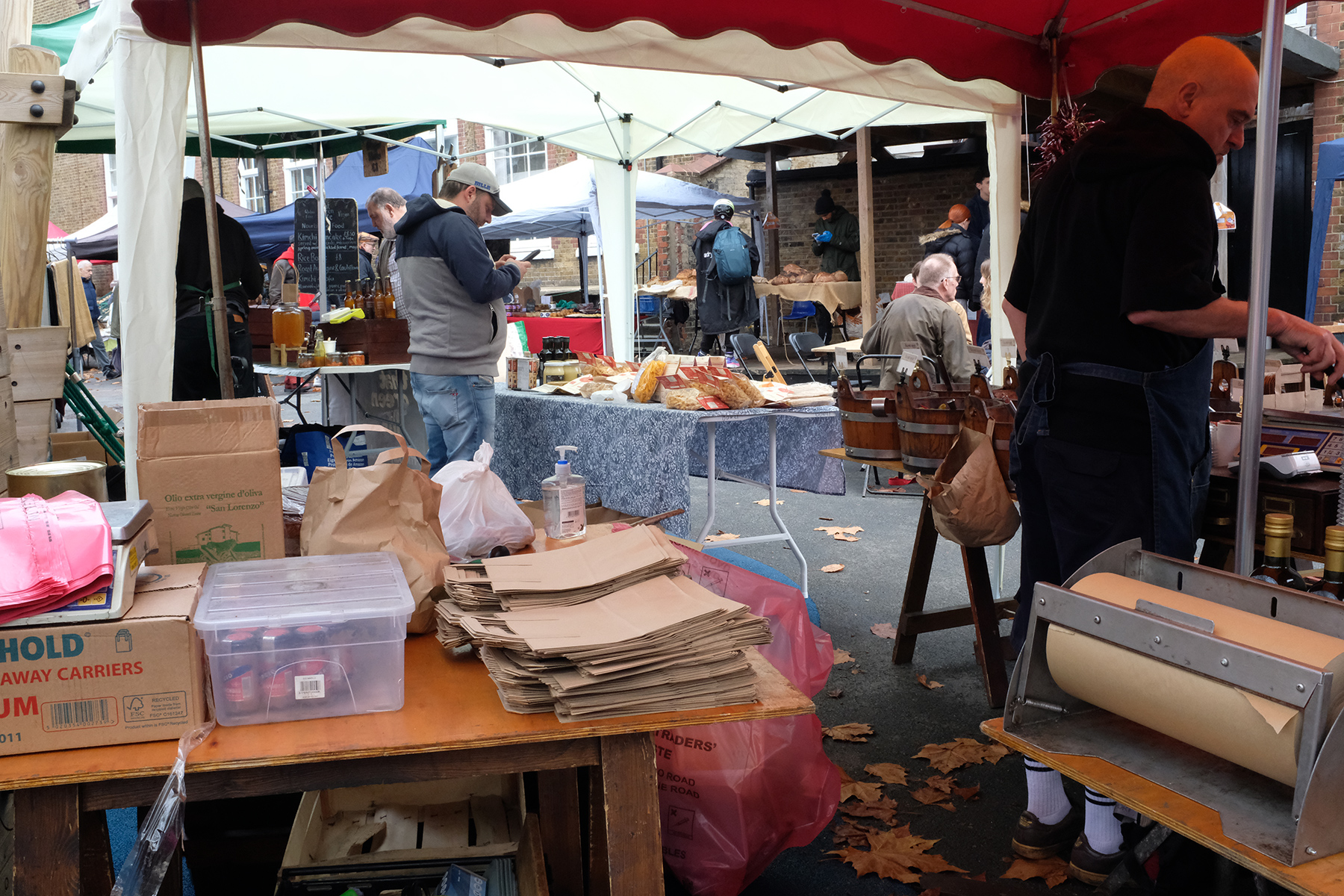
At the brocantes, people naturally gather around lunchtime—pregnant women, children, couples, and friends forming small circles together.
Someone might help carry my bags, or say, “There was something nice over there.”
Before I knew it, although I had arrived alone that morning, I was having tea with nine people by the evening.
Through this project, I also had the chance to meet knit designer Yuuka Futaba, which became another important moment.
There were sunny days when we carried Italian yarn to the park and held our meetings there.
Looking back, this collection became a very personal project.
Only a small number of pieces can be made.
Each one is entirely different from the next.
In the context of brand business, this may be a kind of craftsmanship that is often avoided.
Even so, having the feeling of “wanting to create it” was what mattered most.
I truly hope to share the beauty of these remarkable handcrafts in many different forms.
Through this project,
I feel that we were able to discover a new expression of the “craft” that leinwände values so deeply.
To everyone who was involved in this project, I would like to leave my heartfelt thanks here.

The HAND TO HAND collection will be available exclusively at our pop-up stores.
For the 2026SS season, we will be holding limited-time pop-up stores in Tokyo and Nagoya.
Alongside the 26SS collection, the HAND TO HAND project will be presented in limited quantities.
Handcrafts born in different times and places come together, transforming into one-of-a-kind garments.
We hope you will take this opportunity to experience these special pieces in person.
TOKYO :
HIGASHI Shibuya PARCO 3F
Address: 15-1 Udagawacho, Shibuya-ku, Tokyo 150-8377
Dates: Mar 13 (Fri) – Mar 22 (Sun)
Hours: 11:00 – 21:00
NAGOYA:
Nagoya Sakae Mitsukoshi 3F Re-Style TOKYO
Address: 3-5-1 Sakae, Naka-ku, Nagoya 460-8669
Dates: Mar 25 (Wed) – Mar 31 (Tue)
Hours: 10:00 – 20:00